
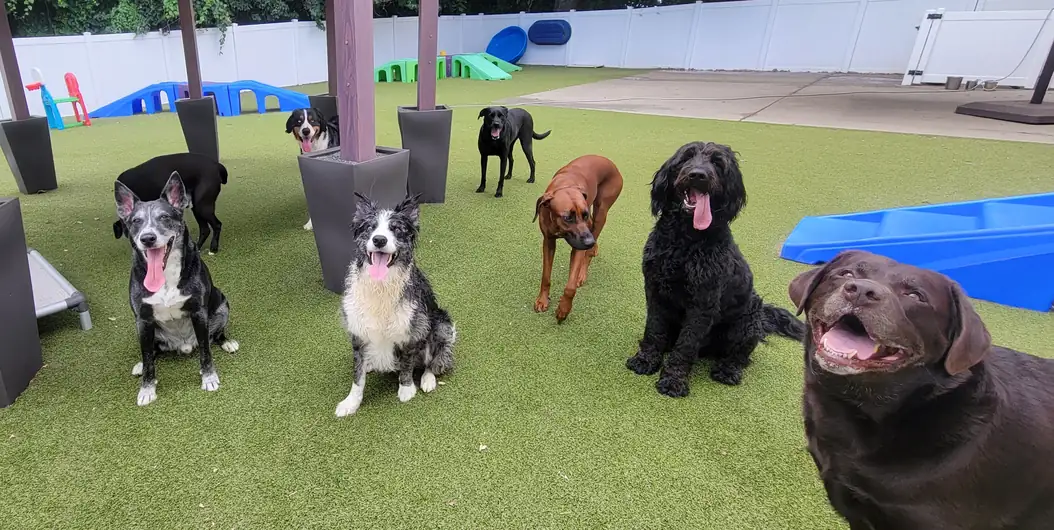
How to Choose a Dog Daycare in Charlotte

Choosing a dog daycare in Charlotte involves more than finding the closest facility or comparing daily prices. A good daycare should provide a safe, supervised environment that fits your dog’s temperament, energy level, play style, and comfort around other dogs.
One thing I’ve learned from working with dogs at One Lucky Pup is that they can respond very differently to the same daycare environment. Some settle into group play quickly. Others need more time, a different group, more breaks, or a care routine that does not involve regular group daycare at all.
Before booking, ask how the daycare evaluates new dogs, organizes play groups, supervises interactions, provides rest, and communicates with families. You should also consider whether the location and schedule fit your normal routine.
Not every dog enjoys group daycare, and a responsible provider should be willing to discuss whether its environment is appropriate for your dog. These are the factors I recommend considering when comparing dog daycare options in Charlotte.
Start With Safety and Supervision
Safety should be the first consideration when evaluating any dog daycare.
A daycare environment can include dogs with different sizes, personalities, energy levels, and communication styles. Even appropriate play can change quickly, so staff should be present, attentive, and prepared to respond when a dog becomes overwhelmed, tired, or uncomfortable.
When speaking with a daycare provider, ask:
- How are dogs supervised during group play?
- How does the team respond when play becomes too intense?
- Are dogs given breaks when they need them?
- How are entrances, exits, gates, and play spaces secured?
- What procedures are followed if a dog becomes sick or injured?
- How will you be contacted if the team notices a concern?
You do not need access to every internal procedure, but the provider should be able to explain its general approach to safety clearly.
Cleanliness matters as well. Play areas should appear maintained and organized, with secure barriers and no obvious hazards. Strong fragrances should not simply be masking persistent odors.
The American Kennel Club’s guide to choosing a dog daycare similarly recommends looking at cleanliness, secure fencing, staffing, emergency procedures, communication, activities, and rest areas.
Ask How New Dogs Are Evaluated
One of the first questions I would ask any daycare is what happens before a new dog joins regular group play.
A dog daycare evaluation gives staff an opportunity to observe how a dog responds to a new environment, unfamiliar people, and other dogs. It can also help the team learn about the dog’s play style, social comfort, energy level, and possible group fit.
At One Lucky Pup, every new daycare dog begins with an evaluation. We use that process to learn about the dog’s temperament, comfort level, play style, and care needs before deciding how to proceed with daycare.
During the evaluation, our team observes how the dog responds to the new environment, interacts with staff, and reacts during introductions to other dogs. We also watch the dog’s body language, energy level, play style, and ability to settle or disengage from play. Those observations help us decide whether group daycare is appropriate and, if so, what type of play group may be the best fit.
We are not looking for every dog to behave the same way. The goal is to understand how that individual dog communicates, responds to stimulation, and handles social interaction in our environment.
An evaluation is not a pass-or-fail test, and it does not guarantee that group daycare will be the right fit for every dog.
Ask the provider:
- Is an evaluation required before regular daycare?
- What does the evaluation include?
- How are dogs introduced to the environment?
- What behaviors does the team observe?
- How does the team determine whether group play is appropriate?
- What happens if a dog appears uncomfortable?
You can read more about what happens during a dog daycare evaluation before scheduling your dog’s first visit.
Look for Thoughtful Play Groups
Putting every dog into one large group is not the same as providing structured daycare.
Dogs can differ substantially in size, energy, confidence, age, and preferred style of play. A young, energetic dog may enjoy active chase and wrestling, while another dog may prefer shorter interactions and more personal space.
At One Lucky Pup, we consider factors such as:
- Size
- Temperament
- Energy level
- Play style
- Social confidence
- Comfort in the environment
Size matters, but it is not the only consideration. Two similarly sized dogs can have very different play preferences, energy levels, or tolerance for interaction.
Playgroup placement is not necessarily permanent. At One Lucky Pup, our team continues monitoring dogs after the initial evaluation and may adjust a dog’s group if its energy level, play style, confidence, or comfort level is not matching well with the dogs around it. For example, we may reassess a group if a dog becomes overwhelmed, repeatedly avoids interaction, plays too intensely for the group, struggles to settle, or appears more comfortable with dogs that have a different play style. A dog that does well with one set of playmates may need a different group as the dogs and overall group dynamic change.
Our goal at One Lucky Pup is to use structured play groups that create a safer and more comfortable experience than simply putting every dog into the same environment.
Consider Your Dog’s Temperament and Comfort Level
Daycare can provide exercise, stimulation, social time, and routine, but it is not automatically the right care option for every dog.
Some dogs enjoy being around other dogs and adjust readily to a group environment. Others may become overstimulated, withdrawn, defensive, or exhausted.
Before choosing daycare, consider how your dog typically responds to:
- Unfamiliar dogs
- New people
- Busy environments
- Separation from you
- Physical play
- Noise and movement
- Changes in routine
- Sharing space or resources
A dog does not need to play constantly to have a successful daycare experience. What matters more is whether the dog can remain reasonably comfortable in the environment and respond appropriately to staff guidance.
Be candid with the daycare about any history of fear, reactivity, resource guarding, escape behavior, handling sensitivity, or difficulty recovering after stressful situations. That information helps staff make better care decisions.
At One Lucky Pup, we would rather have an honest conversation about whether daycare is appropriate than place a dog into an environment that is not working well for them.
That is not a failure by the dog. Group daycare simply is not the best fit for every individual dog.
Check the Daily Routine, Rest, and Enrichment
More activity is not always better.
A daycare day should not be judged simply by how many hours a dog spends actively playing. Continuous, high-intensity activity can be tiring, particularly for puppies, adolescent dogs, older dogs, and dogs that have difficulty regulating their own activity.
Ask:
- What does a typical daycare day look like?
- Are there scheduled or individual rest periods?
- How does the team recognize when a dog needs a break?
- Are activities adjusted for different energy levels?
- Is fresh water consistently available?
- How are feeding or medication needs handled when applicable?
- Are dogs crated or placed in individual spaces at any point?
A provider should be able to explain its routine without suggesting that every dog needs exactly the same amount or type of activity.
At One Lucky Pup, staff watch for signs that a dog may need a break, including overstimulation, repeated avoidance, difficulty settling, or a noticeable change in energy or comfort. When appropriate, the dog can spend time away from group play before being reassessed.
Ask How the Daycare Communicates With Families
Daycare staff may observe your dog for hours in situations you do not normally see at home.
That can give staff useful insight into changes in:
- Energy
- Movement
- Social behavior
- Appetite
- Comfort
- Tolerance for play
Before enrolling, ask how the provider communicates routine observations and unexpected concerns.
You should understand:
- How staff can be contacted
- When the daycare will contact you
- How incidents or health concerns are reported
- Whether the team discusses changes in behavior
- How you can update feeding, medication, or care notes
- Who to contact with questions about your dog’s experience
Photos and webcams can be useful amenities, but they are not substitutes for attentive supervision and direct communication.
I would prioritize a daycare that can give specific answers about your dog over one that relies primarily on generic reassurance.
At One Lucky Pup, if our team notices a meaningful change in a dog’s behavior, comfort, appetite, mobility, or overall condition, we contact the owner directly and explain what we observed. For urgent concerns, we reach out promptly rather than waiting until pickup.
Review Health and Enrollment Requirements
Daycare providers commonly have health and enrollment requirements intended to reduce risk in a shared environment.
Before booking, ask about:
- Required vaccinations
- Age requirements
- Spay or neuter policies, if applicable
- Parasite prevention expectations
- Illness and exclusion policies
- Documentation needed before the first visit
- Procedures following exposure to a contagious illness
- Requirements for puppies
At One Lucky Pup, dogs are required to meet our current daycare vaccination requirements:
- Rabies vaccination
- Distemper/parvo vaccination
- Bordetella vaccination
Canine influenza vaccination is recommended but is not currently required.
Your veterinarian should remain the source for individualized vaccination and preventive-care recommendations. A daycare can explain its enrollment requirements, but it should not replace veterinary guidance.
Consider Location and Practical Convenience
A daycare can look appropriate on paper but still be difficult to use consistently if it does not fit your schedule or travel pattern.
Charlotte traffic, work hours, school schedules, and commuting routes can affect whether a location remains convenient over time. Consider:
- Morning drop-off and afternoon pickup times
- Distance from home or work
- Typical traffic during your travel window
- Parking and building access
- Reservation requirements
- Holiday or weekend availability
- Package and cancellation policies
- Availability of boarding, grooming, or training at the same location
One Lucky Pup has two Charlotte-area locations:
One Lucky Pup Northlake
Our Northlake location is at 11607 Reames Road, Charlotte, NC 28269 and serves families throughout North Charlotte and surrounding areas.
Learn about the Northlake location.
One Lucky Pup Charlotte
Our Charlotte location is at 616 Springbrook Road, Charlotte, NC 28217 and serves families throughout South Charlotte and surrounding neighborhoods.
Learn about the Charlotte location.
You can also compare both One Lucky Pup locations before deciding where to schedule your dog’s evaluation.
Compare More Than the Daily Price
Price matters, but it should not be the only factor when choosing daycare.
When comparing rates, determine what is actually included. Ask whether there are separate charges or package rules for:
- Evaluations
- Full-day and partial-day care
- Multi-day packages
- Late pickup
- Feeding or medication
- Enrichment activities
- Grooming add-ons
- Holiday reservations
- Cancellations or unused package days
Also consider how often your dog will realistically attend. A larger package may offer a lower per-day price but may not make sense if your dog attends only occasionally or is still adjusting to daycare.
You can review One Lucky Pup’s current daycare rates and package options before booking.
Questions to Ask Before Booking Dog Daycare
Use this checklist when contacting a daycare:
- Is an evaluation required for new dogs?
- How are dogs introduced to the facility and play groups?
- How are play groups organized?
- How is group play supervised?
- How does the team respond when a dog becomes uncomfortable?
- Are dogs given rest periods?
- What training or preparation does the staff receive?
- What are the vaccination and enrollment requirements?
- How are emergencies handled?
- How will the team communicate concerns about my dog?
- What should I bring on the first day?
- What is included in the listed price?
- What are the cancellation and late-pickup policies?
- Is daycare appropriate for my dog’s age, temperament, and play style?
A reputable daycare should welcome reasonable questions and provide specific answers.
Choosing One Lucky Pup for Dog Daycare in Charlotte
At One Lucky Pup, these are not simply questions we recommend asking other daycare providers. They reflect many of the same factors our team considers when evaluating new dogs and managing daycare groups at our Charlotte-area locations.
Every new daycare dog begins with an evaluation. We use that process to learn about each dog’s temperament, comfort level, play style, energy, and possible group fit.
During daycare, dogs are placed into supervised play groups using factors such as size, temperament, energy level, and play style. Our approach is intended to provide a more thoughtful experience than unrestricted open play.
Daycare is not right for every dog. If our team believes a dog may need a different routine or additional support, we would rather discuss that honestly with the family than force the dog into an environment that is not working well.
Ready to Schedule Your Dog’s Daycare Evaluation?
Start with an evaluation so our team can get to know your dog’s temperament, comfort level, and play style.
View our current daycare rates and package options on the Pricing page.
